

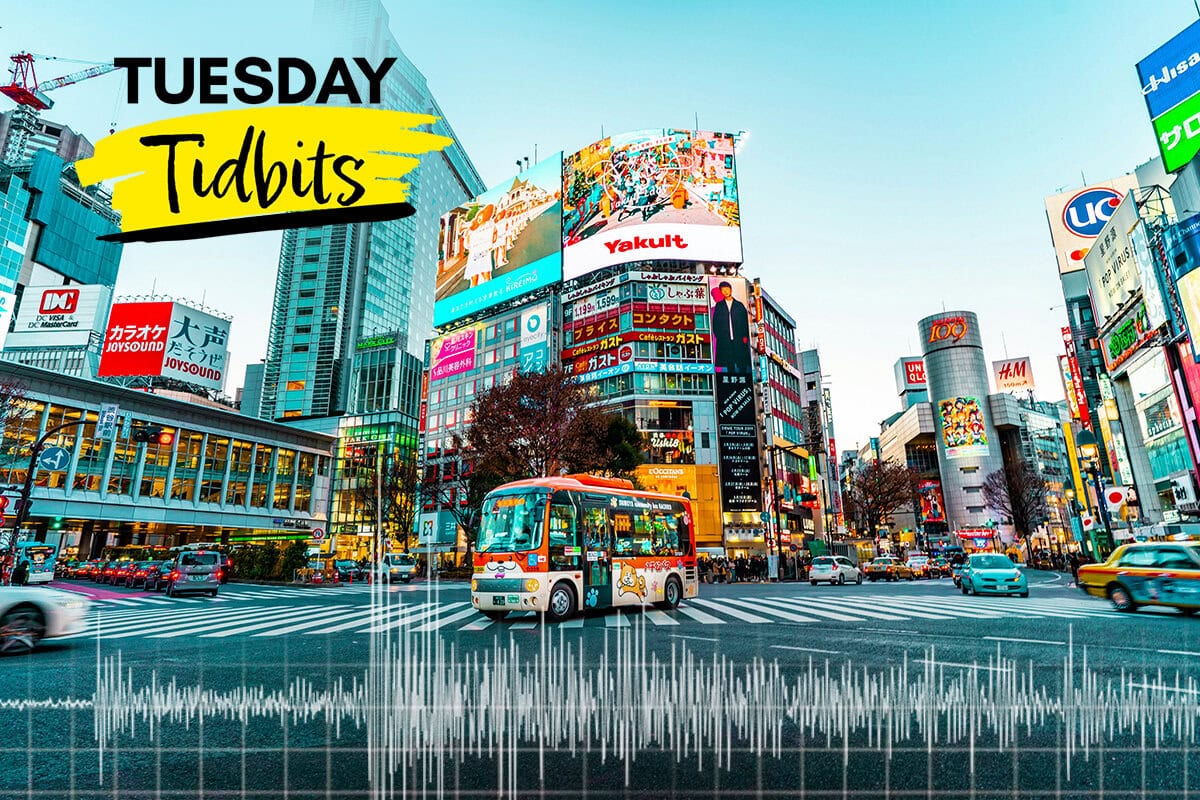
In the United States, seismic design is often viewed through a regional lens. Engineers practicing in California, Alaska, Washington, or Oregon might think about earthquakes daily, while those working elsewhere may encounter seismic provisions only occasionally through code minimums. In Japan, earthquakes are not a regional concern; they are a constant.
Japan sits at the intersection of four major tectonic plates and experiences hundreds to thousands of earthquakes every year, including frequent, moderate events, as well as occasional major earthquakes with global consequences. This reality has shaped a national engineering philosophy that does not attempt to eliminate seismic risk, but instead focuses on controlling structural response, limiting damage, and enabling rapid recovery.
Base Isolation
One of the most influential concepts to emerge from Japanese practice is the widespread use of base isolation. While U.S. engineers are familiar with base isolation through performance-based design and applications in hospitals, emergency facilities, and iconic structures, Japan adopted this approach earlier and at a much broader scale. In a base isolated building, the structure is separated from ground motion using flexible bearings or sliding mechanisms. These systems lengthen the natural period of the building and reduce the acceleration transmitted into the superstructure. Rather than fighting the earthquake through stiffness alone, the building is allowed to move in a controlled manner.
In the United States, base isolation is permitted and regulated through standards such as ASCE/SEI 7 22, Minimum Design Loads and Associated Criteria for Buildings and Other Structures, which provides requirements for the analysis, testing, and qualification of seismic isolation systems. However, base isolation remains relatively rare outside of critical facilities. In Japan, it is widely applied to residential buildings, office towers, and mixed-use developments.
Post earthquake investigations have shown that base isolated buildings are more likely to remain immediately occupiable after major events, even when surrounding conventional structures suffer significant nonstructural damage. For U.S. Professional Engineers, this raises an important question about resilience goals versus minimum life safety objectives embedded in U.S. codes.
Controlled Motion in Action
Another defining characteristic of Japanese seismic design is the emphasis on controlled motion, particularly in tall buildings. Japanese engineers widely use tuned mass dampers and other energy dissipation devices to reduce sway and improve occupant comfort. These systems consist of large masses, often installed near the top of a building, that move out of phase with the structural response. While tuned mass dampers do not prevent damage in extreme events, they significantly reduce vibrations during moderate earthquakes and strong winds.
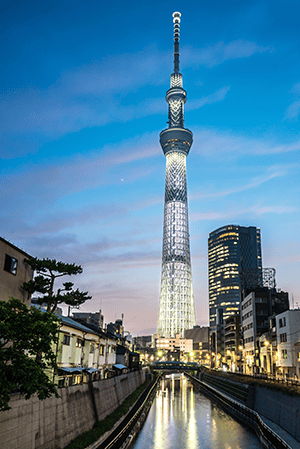
A notable example is the Tokyo Skytree, where a central reinforced concrete column acts as a dynamic damping system inspired by traditional Japanese pagoda construction. Historical pagodas have survived centuries of earthquakes in part due to their flexible wooden frames and central columns that dissipate energy. Modern Japanese engineers have translated this empirical knowledge into analytical models and contemporary materials. In the United States, ASCE 7 allows damping modifications under certain conditions, but Japanese practice demonstrates how motion control devices can be integrated more holistically into architectural and structural design.
Perhaps one of the most surprising lessons from Japan is the strong seismic performance of wood construction. While U.S. engineers increasingly associate wood with low rise residential construction, Japan has a long history of timber buildings designed to accommodate movement. Traditional wood structures rely on deformation capacity, joinery flexibility, and energy dissipation rather than rigid connections. Modern Japanese building codes build on this tradition by emphasizing deformation capacity and connection detailing.
In the United States, seismic design for wood structures is governed by the AWC standards such as the NDS and SDPWS and referenced by ASCE 7 and the building code. These provisions focus heavily on prescriptive shear wall systems and allowable story drift limits. Japan’s experience provides valuable real-world confirmation that wood, when detailed correctly, can perform exceptionally well during earthquakes. As mass timber systems become more common in American practice, Japanese performance data offers useful insight beyond laboratory testing and analytical assumptions.
Infrastructure
Earthquake mitigation in Japan also extends beyond individual buildings to infrastructure and systems. Japan operates one of the most advanced earthquake “early warning networks” in the world. This system detects primary seismic waves and issues alerts seconds before damaging shaking arrives. While the warning time may be brief, it is long enough to trigger automated actions such as slowing trains and shutting down some equipment, and in many settings, can support automated utility safety controls.
In the United States, early warning systems exist in limited form, particularly along the West Coast, but they are not yet deeply integrated into infrastructure design standards. From an engineering perspective, Japan’s approach highlights a shift from purely passive structural resistance to active risk reduction strategies. Engineers are increasingly called upon to consider how buildings and infrastructure interact with sensing technology, automation, and emergency response systems.
U.S. seismic standards such as ASCE 7 are primarily focused on life safety, collapse prevention, and limited damage objectives. While performance-based seismic design allows engineers to target higher performance levels, it remains optional and project specific. Japan’s approach suggests that resilience goals can be embedded more broadly into standard practice through a combination of code requirements, professional culture, and public expectations.
What truly distinguishes Japan’s earthquake mitigation strategy is how deeply it is integrated into everyday life. Seismic design is not treated as an abstract compliance exercise, but as a shared societal responsibility. Schools are designed to function as emergency shelters and public spaces incorporate clear evacuation routes. Infrastructure systems are planned with post-earthquake functionality in mind. Engineering decisions are evaluated not only on whether structures stand, but on how quickly communities can return to normal operation.
Conclusion
For American Professional Engineers, Japan’s experience offers both technical insight and a broader professional lesson. Earthquake resilience is not achieved through a single device, material, or calculation method. It emerges from a consistent philosophy that accepts movement as inevitable and focuses on managing it intelligently. As seismic risk awareness continues to expand beyond traditional high-risk regions in the United States, Japan’s engineering practices provide a compelling example of how performance-based thinking, system integration, and long-term planning can shape safer and more resilient communities.




 1431 Graham Drive, Suite 265
 support@noonpi.com

 Hi! I’m Abby, your virtual assistant.
Base isolation is beneficial against earthquakes with spectrum peaks in the higher frequencies, but are vunerable to low frequency motion.
There were some high rise buildings in Tokyo that were swaying for more than 10 minutes after the main shock of the 2011 Tohoku earthquake. Recent high-rise buildings incorporate both base isolation and seismic dampers to mitigate this issue.
There have been significant revisions in the seismic requirements in the building code, particularly in 1981 and 2000, both learning from past earthquake disasters.
Although old buildings are grandfathered into the old code requirements, any substantial remodel or addition to the building will bring the need to reinforce the entire structure. This becomes large and unexpeceted investments for businesses and homeowners, but keeps the people and society safe.